
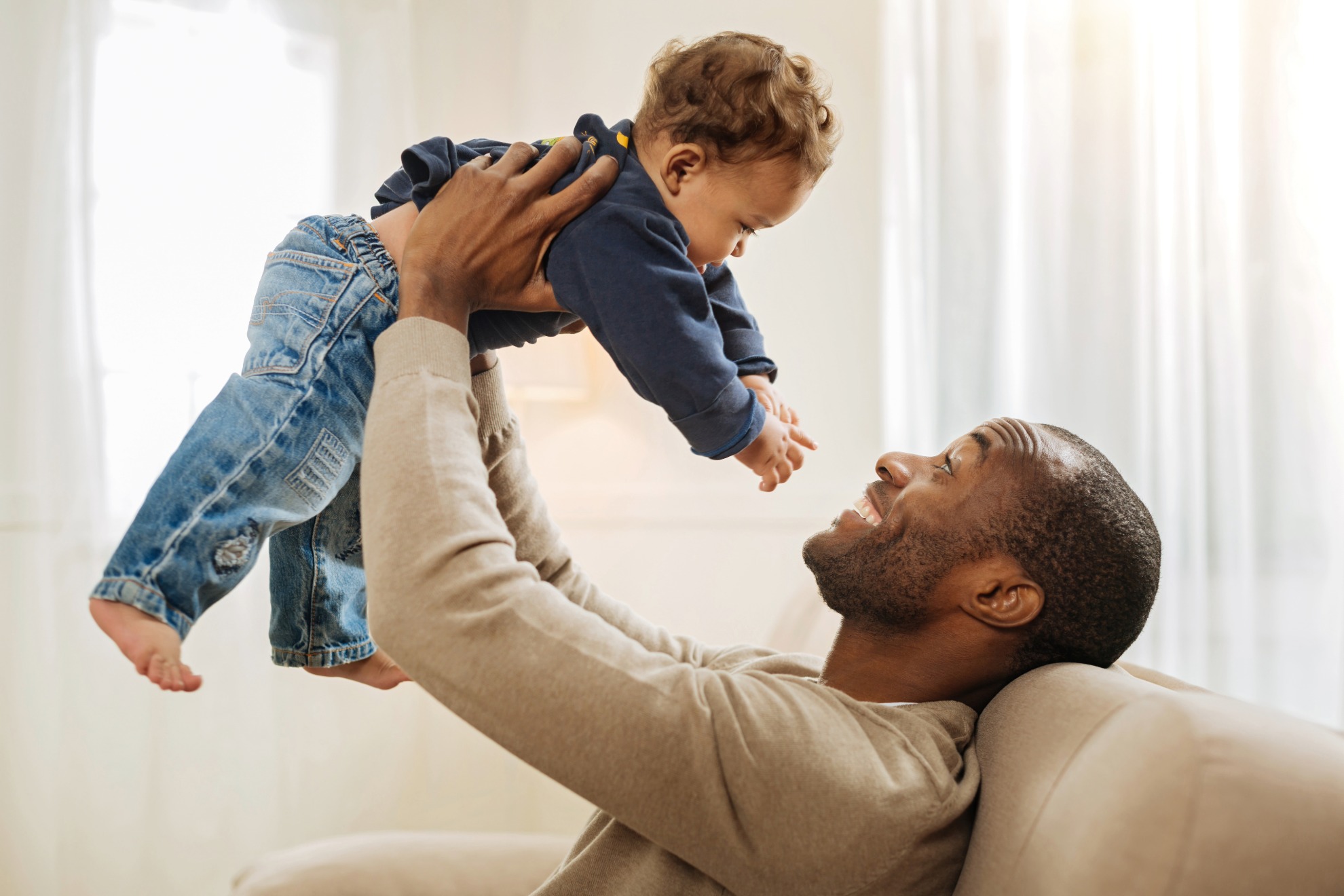
The first two years of life are one of the most important periods of social development. During this time, infants move from basic reflexive interactions to complex social communication, emotional understanding, attachment relationships, and early language.
Parents often notice changes happening almost weekly: more eye contact, smiling, copying facial expressions, pointing, responding to names, showing preferences for people, seeking comfort, and engaging in pretend play.
These early social skills are not extra milestones separate from learning. They are the foundation for later communication, emotional regulation, relationships, and learning.
Understanding what social development typically looks like can help parents recognize strengths, support development through everyday interaction, and identify when additional evaluation may be helpful.
Birth to 3 months: Regulation and early connection
In the newborn period, babies are still learning how to regulate sleep, feeding, body temperature, sensory input, and arousal states. Even in these early weeks, infants are biologically prepared for social interaction.
Infants also begin participating in what researchers call serve-and-return interactions. A baby may look, vocalize, or move, and the caregiver responds with eye contact, talking, smiling, soothing, or imitation.
- Looking at faces
- Calming to familiar voices
- Preferring caregivers’ faces and smells
- Making brief eye contact
- Beginning social smiles around 6 to 8 weeks
These back-and-forth interactions are foundational for brain development.
3 to 6 months: Social engagement expands
Between 3 and 6 months, infants become much more interactive and socially responsive. Relationships are still largely based on regulation, comfort, and repeated interaction.
Infants also begin developing joint attention precursors, early skills involved in sharing attention with another person.
- Smiling socially
- Laughing
- Increased eye contact
- Recognizing familiar people
- Turning toward voices
- Vocalizing during interaction
- Showing excitement during play
- Watching where a parent looks
- Anticipating familiar social routines like peek-a-boo
6 to 9 months: Attachment and shared attention
During the second half of the first year, babies begin showing clearer attachment relationships. Social referencing also becomes especially important.
Social referencing means infants begin looking to caregivers’ emotional expressions to understand whether situations are safe, exciting, or concerning.
- Preference for familiar caregivers
- Seeking comfort when distressed
- Stranger anxiety
- Looking to caregivers to judge situations
- Increased imitation
- Rapid development in babbling, gesture use, turn-taking, and shared attention
9 to 12 months: Intentional communication
Near the end of the first year, infants begin communicating more intentionally. One of the biggest social developments during this period is joint attention.
Joint attention occurs when a child focuses on an object or event, shares that attention with another person, and recognizes the shared experience.
Joint attention is strongly associated with later language development, social communication, and learning. Delays in these skills may sometimes be early indicators of developmental differences, including autism spectrum disorder.
- Responding to their name
- Pointing to show interest
- Showing objects to others
- Waving
- Reaching to be picked up
- Following another person’s point or gaze
- Understanding simple words
12 to 18 months: The emergence of independence
Toddlers become increasingly independent during the second year of life. At this age, toddlers are learning that other people have thoughts, feelings, and reactions separate from their own.
This period is also associated with rapid language growth, which further supports social interaction.
- Stronger preferences
- Separation anxiety
- Imitation of adult behavior
- Simple pretend play
- Increased emotional expression
- Beginning empathy, such as hugging a crying peer or offering a toy
- Imitating household routines
- Seeking praise from caregivers
18 to 24 months: Early social understanding
By age two, many toddlers are engaging in surprisingly sophisticated social learning. Toddlers also begin developing self-awareness, autonomy, and emotional regulation.
This is why behaviors such as tantrums often increase during this period. Emotional systems are developing faster than self-regulation skills.
Social development is closely connected with language, sensory processing, motor development, temperament, caregiver interaction, sleep, and regulation. Development does not occur in isolated categories.
- Simple pretend play
- Following simple directions
- Using words socially
- Bringing adults into play
- Copying peers
- Recognizing emotions
- Showing frustration intentionally
- Testing limits
The importance of relationships
Research consistently shows that infant social development occurs within relationships. Children learn social communication through responsive caregiving, play, imitation, routines, emotional attunement, and shared attention.
This does not mean parents need to constantly entertain children or perform perfectly.
- Repair after stress
- Pauses in interaction
- Opportunities for independent exploration
- Consistent but realistic caregiving
Small daily interactions matter more than perfection.
When parents may consider an evaluation
Children develop at different rates, and variation is normal. However, parents sometimes seek evaluation when concerns arise.
Early evaluation can help clarify whether behaviors fall within expected variation or may reflect a developmental difference requiring support.
Importantly, evaluation is not simply about assigning a diagnosis. A quality developmental assessment helps identify strengths, communication style, learning needs, developmental profile, and areas where support may be beneficial.
- Limited eye contact
- Lack of response to name
- Reduced social smiling
- Minimal babbling or gestures
- Limited shared attention
- Loss of previously acquired skills
- Difficulty engaging socially
- Delayed language development
Early support is often associated with better long-term outcomes.
Final thoughts
The first two years of life involve enormous social growth. Infants move from reflexive interaction to intentional communication, shared attention, emotional understanding, and early relationships.
Much of this development happens through ordinary daily moments: feeding, play, talking, comforting, routines, and shared attention.
These experiences help build the foundation for later communication, emotional development, learning, and relationships.
Questions about infant or toddler development?
Avenir Psychological Services provides developmental, autism, ADHD, and neurodevelopmental assessment services for young children and families seeking clarity about early social communication, language, regulation, and learning needs.
A free consult call can help clarify whether developmental evaluation may be an appropriate next step.
Schedule a Free Consult CallReferences and Further Reading
Center on the Developing Child at Harvard University. (n.d.). Serve and return interaction shapes brain circuitry. https://developingchild.harvard.edu/resources/videos/serve-return-interaction-shapes-brain-circuitry/
Lipkin, P. H., Macias, M. M., Norwood, K. W., Brei, T. J., Davidson, L. F., Davis, B. E., Ellerbeck, K. A., Houtrow, A. J., Hyman, S. L., Kuo, D. Z., Noritz, G. H., Sisk, B., & Voigt, R. G. (2020). Promoting optimal development: Identifying infants and young children with developmental disorders through developmental surveillance and screening. Pediatrics, 145(1).
Murray, L. (2014). The psychology of babies: How relationships support development from birth to two. Hachette UK.
Sroufe, L. A. (2005). Attachment and development: A prospective, longitudinal study from birth to adulthood. Attachment & Human Development, 7(4), 349-367. https://doi.org/10.1080/14616730500365928
Questions about assessment or next steps?
Avenir serves families in Sacramento, Roseville, Davis, Elk Grove, Folsom, Woodland, the Bay Area, and Northern California.
Schedule a Free Consult Call